- 2017
Divisional Articulations
Awards
- Vimeo Staff Pick, 2019
- Best Abstract and Non-Narrative Animation, Anifilm, Trebon, Czech Republic, 2018
- Anca Music Video Award Special Mention, Fest Anca, Zilina, Slovakia, 2018
- Grand Prize Award, SUPERNOVA Festival, Denver, CO, USA, 2017
- Best Experimental Film, ReAnima Festival, Bergen, Norway, 2017
- Special Mention, Experimental Category, CutOut Fest, Mexico, 2017
- Moving Image Award Shortlist, Lumen Prize, UK, 2017
Credits
| Director | Max Hattler |
| Music | Lux Prima |
| Animation | King Lam Chan, Po Yi Chan, Hinyi Cheuk, Ka Man Chow, Cheuk Hei Kai, Tsz Ching Kwan, Hau Ying Lui, Ka Man Luk, Ngai Wan Ma, Cheuk Lam Mui, Kam Ian Sio, Susan Sun, Qi Yu Teo, Ka Yiu Wong, Crystal Yip, Ka Man Yu, Max Hattler |
| Code | Sune Petersen |
| Supported by | Teaching Start-Up Grant from the University Grants Committee of Hong Kong (Project No. 6000566). |
| Available formats | UHD, 1080p HD, DCP |
| Frame rate | 24 |
| Length | 4’33” |
| Year | 2017 |
Still Images
PressKit
Dowload a presskit here with an artist statement, screening information, awards and sample photos Lorem ipsum dolor sit amet, consectetur adipisici elit, sed eiusmod tempor incidunt ut labore et dolore magna.
Screenings & Exhibitions
2024-2020
- LINOLEUM Contemporary Animation and Media Art Festival, Kyiv, Ukraine, 4-8 Sep 2024 (Rules and Rituals for an Animated Role Play curated by Vassilis Kroustallis)
- Clockenflap Festival, 1-3 Dec 2023 ((RE)HABITATION screening curated by Videotage)
- Relentless Melt No. 29: Animated Abstractions from Hong Kong, University for the Creative Arts, Farnham, UK, Wed 29 Nov 2023, 14:00 (screening curated and presented by Max Hattler, hosted by Animation Research Centre and Prof Birgitta Hosea)
- Relentless Melt No. 28: Experimental Animation from Hong Kong, Film University Babelsberg, Potsdam, Germany, Wed 1 Nov 2023, 13:00 (Room 6001) (screening curated and presented by Max Hattler, hosted by Film University’s animation department)
- Beyond the Space, Art Gwangmyeong, Gwangmyeong-si, South Korea, 21 Oct – 10 Nov 2022 (public screen exhibition curated by Shirley Sehee Kim. Artists included: Max Hattler, Ina Conradi, Tate Egon Chavez, Mark Chavez, Shirley Sehee Kim)
- Labocine, Issue #80 “Electric Visions”, 6 Sep – 3 Oct 2022
- FILE Festival, Sao Paulo, Brazil, 13 Jul – 28 Aug 2022
Taipei National University of the Arts, Taipei, Taiwan, 10 Mar 2021 (‘Experimental Visual Narrative’ lecture by Aco Wu-Ching Chang) - Relentless Melt No. 19: Hong Kong Visual Music, Seeing Sound Practice-Led Visual Music Symposium, Sun 13 Dec 2020 (screening curated by Max Hattler)
- Relentless Melt No. 18: Hong Kong Refractions, London, UK, Wed 28 Oct 2020, 19:00 (screening curated by Max Hattler, presented by London International Animation Festival)
- EXiS: Experimental Film and Video Festival in Seoul, South Korea, 1-15 Aug 2020 (Indi-Visual: Max Hattler)
- London Music Video Festival, London, UK, 1 Jul 2020
- 10th International Animated Film Festival Animocje, Bydgoszcz, Poland, 19-25 Apr 2020 (POSTPONED) (Special Music Animated Program)
2019
- 3rd International Animation Exhibition (IAE)国际动画艺术展, Beijing, China, 15-21 Dec 2019 (more info)
- Relentless Melt No. 15: Hongkongské abstrakce, Filmasia Asian Film Festival, Kino Ponrepo, Prague, Czechia, Sat 7 Dec 2019, 15:00-16:30 (screening curated by Max Hattler, introduced by Iresa Cho)
- Eyemyth Media Arts Festival, Mumbai, India, 29 Nov – 1 Dec 2019 (Visual Music Showcase)
- Backup & Beyond Film and Media Art Festival, Weimar, Germany, 27 Nov – 1 Dec 2019
- Relentless Melt No. 14: 香港實驗動畫精選, Zhong Shan 73 (中山73影視藝文空間), Taichung, Taiwan, Sat 26 Oct 2019, 19:30-20:30 (screening curated by Max Hattler for International Animation Day)
- Taichung International Animation Festival, Taichung, Taiwan, 11-20 Oct 2019 (Director in Focus 2)
- YouTopia, Malý Berlín, Trnava, Slovakia, 21-22 Sep 2019
- BlackBox Short Film Festival, Switzerland, 17 Aug (Kunstraum Aarau) and 31 Aug 2019 (TaB Reinach)
- Supertoon International Animation Festival, Sibenik, Croatia, 22-26 Jul 2019 (Animated Music Video Competition)
- ASIFA San Francisco Spring Showcase, City College of San Francisco, SF, CA, USA, 11 Jun 2019
- 15 Years of Athens Digital Arts Festival, FOKAS, Athens, Greece, 10-11 May 2019
- Anifilm, Trebon, Czech Republic, 7-12 May 2019 (Max Hattler Retrospective)
- La Truca International Animation Festival, Cali, Colombia, 6-10 May 2019
- Experimental Animation: From Analogue to Digital, AUT WZ Building, Auckland University of Technology, New Zealand, 3-17 May 2019 (exhibition curated by Miriam Harris)
- 26th Stuttgart International Festival of Animated Film, Metropol 3, Stuttgart, Germany, 17:00 Fri 3 May 2019 (In Persona: Max Hattler screening)
- Videolands, MOMus Experimental Center for the Arts, Thessaloniki, Greece, 5-25 Apr 2019 (Video Art Miden exhibition)
- Brussels Independent Film Festival, Brussels, Belgium, 11-18 Feb 2019
- Objects in Motion Animated Film, Rotary Centre for the Arts, Kelowna, BC, Canada, 15 or 22 Jan 2019
2018
- Piccolo Festival Animazione, Pordenone, Italy, 28 Dec 2018 (ReAnima carte blanche screening)
- Academy of Arts, Architecture and Design in Prague, Prague, Czech Republic, 17 Dec 2018 (History and Theory of Animation lecture by Eliska Decka)
- FAMU, Academy of Performing Arts, Prague, 12 Dec 2018 (Možnosti animace / Potentials of Animation lecture by Eliska Decka)
- CREATE! MakerSpace, CityU Library, City University of Hong Kong, 3 Dec 2018 (Guest Lecture 5.0: Max Hattler: Audio-Visual Abstraction: Animation as Fine Art Practice)
- London International Animation Festival, London, UK, 30 Nov – 9 Dec 2018 (Abstract Showcase competition)
- TADAEX | Tehran Annual Digital Art Exhibition, Tehran, Iran, 9-16 Nov 2018
- 1st BCK Film Symposium, Balkan Can Kino, Athens, Greece, 4 Nov 2018 (Video Art Miden screening curated by Stavros Kapetis)
- Punto y Raya Festival, CeTA, Wroclaw, Poland, 25-28 Oct 2018 (international competition)
- Animatou, Geneva, Switzerland, 5-13 Oct 2018
- Music for the Eyes: Visual Music, Sonoma Film Institute, Rohnert Park, CA, USA, 5 + 7 Oct 2018 (Center for Visual Music screening curated by Cindy Keefer)
- Relentless Melt No. 8: Hong Kong in Motion, SUPERNOVA Festival, Denver, CO, USA, 22 Sep 2018 (screening curated by Max Hattler)
- Animanima International Animation Festival, Cacak, Serbia, 4-8 Sep 2018
- Figueira FilmArt, Figueira da Foz, Portugal, 27 Aug – 2 Sep 2018
- 17th International Kansk Video Festival, Kansk, Siberia, Russia, 19-25 Aug 2018
- MôTif Film Festival, Fairbanks, Alaska, USA, 3-5 Aug 2018
- Insomnia Festival, Yukhnovsky District, Kaluga Oblast, Russia, 19-23 Jul 2018
- 25th OpenEyes Filmfest, Marburg, Germany, 18-22 Jul 2018
- Relentless Melt No. 6: Underlige animationsfilm fra Hong Kong, Dynamo, Odense, Denmark, 18 Jul 2018 (screening curated and introduced by Max Hattler)
- Video Art Miden, Kalamata, Greece, 5-7 Jul 2018
- Museum of Digital Art (MuDA), Zurich, Switzerland, Thu 5 Jul 2018 (Metaz series Max Hattler artist talk)
- Festival Images Contre Nature, Videodrome 2, 49 Cours Julien, 13006 Marseille, France, 3-7 Jul 2018
- Fest Anca, Zilina, Slovakia, 28 Jun – 1 Jul 2018
- Relentless Melt No. 5: Hong Kong Rhythms, St. Pölten University of Applied Sciences, Sankt Pölten, Austria, 28 Jun 2018 (screening curated and introduced by Max Hattler)
- Diversions International Short Film Festival, Sveti Ivan Zelina, Croatia, 25 Jun – 1 Jul 2018
- Hong Kong Arthouse Film Festival, Hong Kong Arts Centre, Hong Kong, 20 Jun 2018
- Animation x Experimental: International Experimental Animation Exhibition 2018, Fuzhong 15, New Taipei City, Taiwan, 2 Jun 2018 (lecture: ‘Animation Between Visual Music and Narrative Abstraction’)
- Both Sides Now 4 – Asia Tour, Duddell’s, Hong Kong, 30 May 2018
- Relentless Melt No. 3: Alternate Realities Hong Kong, Under the Radar, Vienna, Austria, Fri 25 May 2018
- Athens Digital Arts Festival, Athens, Greece, 24-27 May 2018
- MuVi5, Palacio Abacial y Convento de Capuchinos, Alcala la Real, Jaen, Spain, 18-22 May 2018
- MuVi5, Real Conservatorio Superior de Musica Victoria Eugenia, Granada, Spain, 18-22 May 2018
- Relentless Melt No. 2: Hong Kong Audio-Visual Abstractions, Splice Festival, London, UK, Sun 13 May 2018
- Anifilm, Trebon, Czech Republic, 1-6 May 2018
- 25th Stuttgart International Festival of Animated Film, Stuttgart, Germany, 24-29 Apr 2018
- On The Road: Young Media Artists in China, City University of Hong Kong, 23 Mar – 19 Apr 2018
- Both Sides Now 4 – UK Tour, Phoenix, Leicester, UK, 29 Mar 2018
- Both Sides Now 4 – UK Tour, Fabrica, Brighton, UK, 27 Mar 2018
- GLAS Animation Festival, Berkeley, CA, USA, 22-25 Mar 2018
- 14th Akbank Short Film Festival, Istanbul, Turkey, 19–29 Mar 2018
- Animated at Kulturhuset #10: Best of ReAnima, Kulturhuset, Oslo, Norway, 19 Mar 2018
- Both Sides Now 4 – UK Tour, SOAS, University of London, London, UK, 9 Mar 2018
2017
- Animateka Festival, Ljubljana, Slovenia, 4-10 Dec 2017 (Jury Programme V: Best of ReAnima)
- Relentless Melt No. 1: Hong Kong Music Abstractions, Floating Projects, Hong Kong, 2 Dec 2017
- Business of Design Week, deTour, PMQ, Hong Kong, 1-8 Dec 2017
- Artist Film Weekender 2017, HOME, Manchester, 30 Nov – 2 Dec 2017 (Both Sides Now curated by Isaac Leung and Jamie Wyld)
- Universiti Kuala Lumpur, Kuala Lumpur, Malaysia, 27 Nov 2017 (Oblique Narrative and Synaesthetic Experience – The Abstract Animations of Max Hattler)
- Lumen Matrix, Today Art Museum, Beijing, China, 25 Nov 2017 – 7 Jan 2018
- KLEX, Kuala Lumpur, Malaysia, 25 Nov 2017 (Max Hattler Retrospective)
- KLEX: Kuala Lumpur Experimental Film, Video & Music Festival, Kuala Lumpur, Malaysia, 24-26 Nov 2017
- VisMatters, UNSW Art and Design, Paddington (Sydney), Australia, 21 Nov – 5 Dec 2017 (ON|OFF 100101010 exhibition, curated by June Kim and Ina Conradi)
- EXiM 2017 Cross-Straits Experimental Animation Festival, Macao Museum of Art, Macao, 18 Nov 2017
- Clockenflap Festival, Hong Kong, 17-19 Nov 2017 (Videotage screening curated by Isaac Leung)
- Flensburger Kurzfilmtage, Flensburg, Germany, 15-19 Nov 2017
- Denver Film Festival, Denver, CO, USA, 11 Nov 2017
- 56 Moon Animation Festival, Chengdu, China, 11 Nov 2017 (Max Hattler solo screening)
- CutOut Fest, Queretaro, Mexico, 9-12 Nov 2017
- Palm Springs International Animation Festival, Palm Springs, CA, USA, 9-11 Nov 2017
- Animation, Experiment #2 | Abstract Animation 2, New Media Projects, Tehran, Iran, 8 Nov 2017, 6pm
- 26th St. Louis International Film Festival, St. Louis, USA, 2-12 Nov 2017
- Multivision, Erarta Museum, St. Petersburg, Russia, 28 Oct – 20 Nov 2017 (Heroes and Illusions exhibition)
- KLEX: Pre-Festival Event, Kuala Lumpur, Malaysia, 21 Oct 2017
- 31st Braunschweig International Film Festival, Braunschweig, Germany, 17-22 Oct 2017
- ReAnima Festival, Bergen, Norway, 29 Sep – 1 Oct 2017
- SUPERNOVA Outdoor Digital Animation Festival, Denver, CO, USA, 22-23 Sep 2017
- Switch to Art. Videokunst im Brückenhaus, Neu-Ulm, Germany, Sep 2017 – Aug 2018 (curated by Dunja Bialas)
- Ars Electronica Festival, Linz, Austria, 7-11 Sep 2017 (Max Hattler: In Persona screening)
- Ars Electronica Festival, Linz, Austria, 7-11 Sep 2017 (Deep Space 8K: Max Hattler: Expanded Abstractions)
- Festival Silhouette, Paris, France, 25 Aug – 2 Sep 2017
- Lumen Prize Long List + Lumen Online Gallery, Aug 2017
- London Animation Club, London, 1 Aug 2017 (Max Hattler Returns to… talk/screening)
- Animation Block Party, Brooklyn, NY, USA, 27-30 Jul 2017
- Expo 2017, Astana, Kazakhstan, 14 Jul 2017 (Max Hattler Retrospective presented by Visual Music Award and German Pavilion)
- 29th Society for Animation Studies Conference, University of Padova, Padua, Italy, 4 Jul 2017 (presentation: ‘Expanded Abstractions: From Fake Holography to Broken Stereoscopy’)
- Vienna Independent Film Festival, Vienna, Austria, 3-7 Jul 2017
- Short to the Point Film Festival, Romania, June 2017
- Visual Music Award, Gelnhausen, Germany, 23 Jun 2017
- Expo 2017, Astana, Kazakhstan, 13 Jun (Visual Music
- Award screening at German Pavilion)
Third Culture Film Festival, Hong Kong, 21-23 Apr 2017 (preview) - Filmfest Dresden International Short Film Festival, Dresden, Germany, 4-9 Apr 2017 (Animated: Max Hattler Retrospective; preview version)
- Sonar Hong Kong, Hong Kong, 1 Apr 2017 (Max Hattler – Sonar+D; preview version)
What others have said
Watching Max Hattler’s Divisional Articulations is like watching a machine in motion. Even without knowing what any individual piece is for, there’s a satisfying chug to it, a hypnotic sense that everything is just where it’s supposed to be. There’s a clear line from Hattler’s experiment back to John Whitney’s 1972 film Matrix III (Hattler himself pointed that out in interviews about the film), but the intricacy has been amped up to an incredible degree. Hattler makes the most of the retro-futurist comparison by borrowing from Bauhaus and constructivism for the film’s visual language—as simple as the component shapes are, they still read as a vision of industry, technology and futurism. Fair warning to folks with ocular sensitivities: the visual feed back from this one can be overwhelming, and it’s probably best viewed on the biggest screen you can manage. Complex and intricate as it is, though, appreciating Divisional Articulations is all about the simple satisfaction of watching video and audio in perfect sync, and letting the boundary between your senses blur.
Max Hattler’s Divisional Articulations is an exceptional, highly refined abstract work of 2D computer fine art that I’ve enjoyed watching several times.
Karl Cohen, ASIFA-SF, 2019
We appreciate the original approach in this video, displaying a unique sensibility to sound and visuals. The techniques, though based on abstract shapes, lines, and computer processing, carry a human fingerprint, and spark curiosity about how it was done.
Anca Music Video Award Special Mention (jury statement), Fest Anca, 2018
This work rooted in modernism evolves through random procedural animation creating a geometric, organic flow. A piece of art that uses contemporary technology progressively to create digital poetry.
Best Abstract and Non-Narrative Animation (jury statement), Anifilm, 2018
Audio Visual collaboration between Max Hattler and musician Lux Prima is an animation made up of simple shapes and visual feedback (and isn’t as boring as that sounds).
… an energetic, thoroughly captivating abstraction… an example of outstanding collaboration in new-media animation and art.”
SUPERNOVA Festival 2017
An exceptional piece of experimental animation art. The geometric patterns make a perfect fusion with the music, creating a hypnotic and delighting visual state. It is a visual essay about new routes to work with animation.
Best Experimental Film (jury statement), ReAnima Festival 2017
Fuzzy analogue music and geometric digital animation collide in this trippy audiovisual collaboration.
More constructivist than Hattler’s previous works, Divisional Articulations spreads the synth urgency of Lux Prima to every location: zooming in and out, moving left and right, and trying to fill in cinematic space and the space of desires.
Repetition and geometry play out in trance-inducing fashion. German video artist and experimental filmmaker Max Hattler talks about his latest gambit, a collaboration with contemporary composer Lux Prima: ‘This video is my visual interpretation of the fuzzy analogue loop-based music created by Lux Prima. Sound and image collide in an electronic feedback loop, spawning arrays of divisional articulations in time and space. The concept of the video borrows from Paul Klee’s Bauhaus teachings and draws on visual influences ranging from Constructivist art to computer animation pioneer John Whitney’s seminal film experiment Matrix III (1972)’.
super trippy
Figuras bidimensionales, generadas mediante ordenador y conceptualizadas por el artista digital alemán, se articulan entre sí al compás de la sintética música del compositor británico Lux Prima para resultar en un hipnotizante, bauhausiano, contemporáneo y digitalmente abstracto paisaje, que sin duda Hans Richter, Walter Ruttmann, Viking Eggeling o cualquier vanguardista de comienzos del siglo XX estaría encantado de ver.
Enjoy all 4’33” of it (yes, we got the reference too).
Other Projects
- 2019
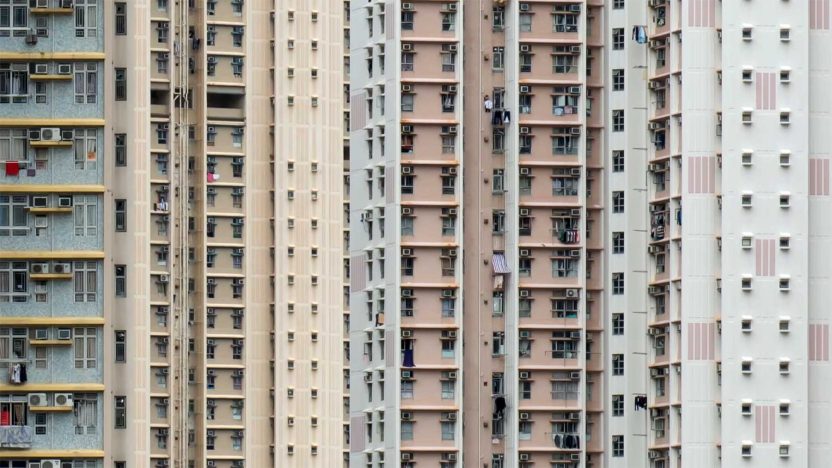
This experimental animation approaches Hong Kong’s built environment from the conceptual perspective of celluloid film, by applying the technique of film animation to the photographic image. The city’s signature architecture of horizon-eclipsing housing estates is reimagined as parallel rows of film strips: Serial Parallels.
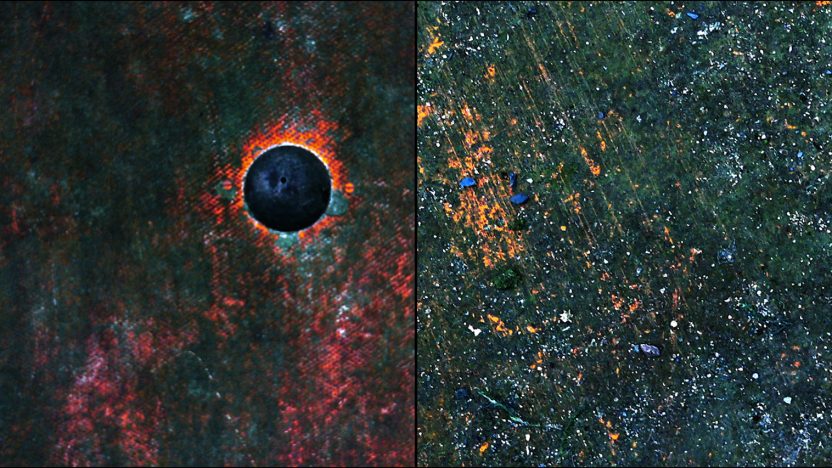
Responding to the compositional and aesthetic qualities of abstract expressionism and cameraless animation, All Rot uses photographic reanimation to render the mundane environment of a decaying crazy golf course into a rapturous split-screen experiment in synaesthetic cinema.