- 2010
Spin
Awards
- Vimeo Staff Pick, 2012
- Premio Giorgio ‘Maestro’ Tarocco (“for the technically most innovative work”), San Gio Festival, Verona, Italy, 2011
- New Signs Award, Lago Film Fest, Revine Lago, Italy, 2011
- moves11 Award, moves Festival, Liverpool, UK, 2011
- SuperShort Award, Skepto Int’l Film Festival, Sardinia, Italy, 2011
- Political Animation Award, KLIK! Amsterdam Animation Festival, Holland, 2010
- Third Prize Jury Award, GIGUK Gießen VideoArt Festival, Germany, 2010
Credits
| Director | Max Hattler |
| Producer | Nicolas Schmerkin |
| Associate Producer | Max Hattler |
| Editing | Tony Fish, Max Hattler |
| Editing Consultants | Noriko Okaku, Nicolas Schmerkin |
| Head of 2D Animation | Noriko Okaku |
| Animation | Noriko Okaku, Albert Papaseit, Enrik Pavdeja, Tom Schwarz, Milad Firoozian, Max Hattler Technical Directors: Enrik Pavdeja, Tom Schwarz, Anshul Pendse |
| 3D Modelling and Rendering | Milad Firoozian, Enrik Pavdeja, Tom Schwarz, Anshul Pendse, Stoyan Dimitrov, Julien Rancoeur, Flavio Perez |
| Compositing | Max Hattler, Noriko Okaku, Enrik Pavdeja, Tom Schwarz, Anshul Pendse, Papaya Gonzales, Julien Michel |
| 2D Scanning and Artwork | Rodrigo Vives, Olivier Guillaume Simpson |
| 3D Scanning | 2h3D Ltd |
| Music and Sound | Eclectic |
| Production Management | Emilie Jacobs, Flavio Perez, Nicolas Schmerkin |
| Administration de production | Elsa Chevallier, Noémie Jardin, Amiel Roux |
| Produced by Autour de Minuit | |
| Co-produced by Arcadi | |
| With the participation of Centre National de la Cinématographie (financial contribution) | |
| With the participation of QOOB | |
| Visa d’exploitation N° 121 995 | |
| Available formats | Full HD digital file, Beta SP, DigiBeta, DVD |
| Length | 4 min |
| Year | 2010 |
Screenings & Exhibitions
2017-2024
- Annecy International Animation Film Festival, Annecy, France, 9-15 Jun 2024 (Dance animation programme curated by Marcel Jean)
- University of Cologne, Cologne, Germany, 26 Apr 2022 (guest lecture in Dr. Maike Sarah Reinerth’s course “Animation|Politik: Propaganda und Protest, Information und Transformation” for MA Medienkulturwissenschaft)
- Big Cartoon Festival Special Events, Moscow, Russia, 31 Oct + 3 Nov 2020 (British Council Programme ‘Family Portrait’)
- Taichung International Animation Festival, Taichung, Taiwan, 11-20 Oct 2019 (Director in Focus 1)
- About Receptive Rhythms, Goethe-Gallery, Goethe-Institut Hong Kong, 19 Sep 2019 (artist talk, part of Max’s solo exhibition Receptive Rhythms)
- Anifilm, Trebon, Czech Republic, 7-12 May 2019 (Max Hattler Retrospective)
- 26th Stuttgart International Festival of Animated Film, Metropol 3, Stuttgart, Germany, 17:00 Fri 3 May 2019 (In Persona: Max Hattler screening)
- 32nd Stuttgarter Filmwinter, Stuttgart, Germany, Sat 19 Jan 2019 (A Broken Link screening curated by Uta Daur, Claire Taylor, Samantha Ferris, Simon Hollington and Andrew Mars)
- London International Animation Festival, London, UK, 4 Dec 2018, 6:30pm (Aftermath screening curated by Lizzy Hobbs and Abigail Addison)
- Aftermath: animations exploring war, conflict and loss, Tate St Ives, St Ives, UK, 27 Oct 2018 (curated by Lizzy Hobbs and Abigail Addison)
- Aftermath: animations exploring war, conflict and loss, New Walk Museum, Leicester, UK, 6 Oct 2018 (curated by Lizzy Hobbs and Abigail Addison)
- Museum of Digital Art (MuDA), Zurich, Switzerland, Thu 5 Jul 2018 (Metaz series Max Hattler artist talk)
- Animation x Experimental: International Experimental Animation Exhibition 2018, Fuzhong 15, New Taipei City, Taiwan, 2 Jun 2018 (lecture: ‘Animation Between Visual Music and Narrative Abstraction’)
- Kontaktfestival, Bamberg, Germany, 24-27 May 2018
- vkunst frankfurt VIII: Mein Neues Ich (My New Me), Galerie Mühlfeld+Stohrer, Frankfurt, Germany, 4-5 May 2018
- Anifilm, Trebon, Czech Republic, 1-6 May 2018
- Indie Visions in Stop-Motion, Northwest Film Center, Portland, OR, USA, Sun 22 Apr 2018, 4:30pm (curated by Rose Bond; part of the Sunday series Animated Worlds: Stop Motion Classics Oct 2017 – May 2018)
- SinemaDansAnkara, Ankara, Turkey, 15-18 Dec 2017
- KLEX, Kuala Lumpur, Malaysia, 25 Nov 2017 (Max Hattler Retrospective)
- 56 Moon Animation Festival, Chengdu, China, 11 Nov 2017 (Max Hattler solo screening)
- Festival de Videodanza de Palma, Mallorca, Spain, 29-30 Sep 2017
- Ars Electronica Festival, Linz, Austria, 7-11 Sep 2017 (Max Hattler: In Persona screening)
- Jumping Frames – International Dance Video Festival, Hong Kong, 7-9 Sep 2017
- Expo 2017, Astana, Kazakhstan, 14 Jul 2017 (Max Hattler Retrospective presented by Visual Music Award and German Pavilion)
- Stuttgart Media University, Stuttgart, Germany, 13 Apr 2017 (guest lecture)
- Filmfest Dresden International Short Film Festival, Dresden, Germany, 4-9 Apr 2017 (Animated: Max Hattler Retrospective)
- Moovy – Köllner TanzFilmFestival, Museum Ludwig, Cologne, Germany, 24-25 Mar 2017
- International Film Festival and Forum on Human Rights, Flux Laboratory, Geneva, Switzerland, 14-19 Mar 2017 (Choreoscope screening)
- 30th Stuttgarter Filmwinter, Stuttgart, Germany, 18-21 Jan 2017
2015-2016
- The Age of Experience, Angewandte Innovation Lab, Vienna, Austria, 1-20 Dec 2016 (curated by Harald Kraemer)
- Roffa mon Amour, KINO, Rotterdam, Holland, 11 Nov 2016 (Best of KLIK!)
- Institute for Media and Communication Studies, University of Mannheim, Mannheim, Germany, 24 Oct 2016 (‘Animation Art and Video Activism’ lecture)
- Punto y Raya Festival, ZKM Center for Art and Media, Karlsruhe, Germany, 23 Oct 2016 (masterclass)
- Lasalle College of the Arts, Singapore, 30 Jun 2016 (guest lecture)
- SCAD Hong Kong, Hong Kong, 10 May 2016 (New Media Art and Animation lecture)
- California Institute of the Arts, Valencia, CA, USA, 10 Feb 2016 (visiting artist lecture)
- California State University, Los Angeles, CA, USA, 9 Feb 2016 (lecture)
- Multfest – The IX Great Animated Film Festival, Moscow, Russia, 30 Oct – 8 Nov 2015 (British Council screening)
- Indie-Anifest, Seoul, Korea, 17-21 Sep 2015 (Max Hattler screening)
- MIAF, Melbourne, Australia, 24 Jun 2015 (Max Hattler screening+Q&A)
- Hongik University, Seoul, Korea, 19 May 2015 (lecture)
- Open Source Art Forum, WCO Korea, Seoul, Korea, 17 May 2015 (lecture)
- Resonate, Belgrade, Serbia, 17 Apr 2015 (lecture)
- FICAM, Meknes, Morocco, 20-25 Mar 2015
- Monstra Animated Film Festival, Lisbon, Portugal, 17 Mar 2015 (masterclass)
- Tehran International Animation Festival, Tehran, Iran, 12 Mar 2015 (masterclass)
- School of Creative Media, City University of Hong Kong, 12 Jan 2015 (lecture)
- Fiver International Videodance Festival, La Rioja, Spain, 2-3 Jan 2015
2014
- Sint Lucas Antwerpen, Antwerp, Belgium, 15 Dec (masterclass)
- IMM – Institut für Musik und Medien, Düsseldorf, Germany, 11 Dec (lecture)
- Cologne Game Lab, University of Applied Sciences, Cologne, Germany, 10 Dec (lecture)
- Goldsmiths, University of London, London, UK, 9 Dec (lecture)
- University of the West of England, Bristol, UK, 3 Dec (lecture)
- Middlesex University, London, 2 Dec (lecture)
- Loikka@kirjasto Library Tour, Oulu, Finland, autumn (Best of Loikka 2013)
- Echo Park Film Center, Los Angeles, CA, USA, 21 Nov (retrospective)
- University of Southern California, Los Angeles, CA, USA, 19 Nov (lecture)
- CalArts, Valencia, California, USA, 17 Nov (lecture)
- Norwich University of the Arts, Norwich, UK, 7 Nov (lecture)
- London International Animation Festival, London, 1 Nov (masterclass)
- London College of Communication, London, UK, 30 Oct (lecture)
- Choreoscope, Barcelona, Spain, 16-17 Oct
- Medialogy, Aalborg University Copenhagen, Copenhagen, Denmark, 16 Oct (lecture)
- London Animation Club, Green Man, Fitzrovia, London, 7 Oct (artist talk)
- National Film and Television School, Beaconsfield, UK, 29 Sep (lecture)
- CASS, London Metropolitan University, London, 24 Sep (artist talk)
- Fantoche, Baden, Switzerland, 2-7 Sep
- Shorts Attack, Germany, Sep (touring programme)
- Animix, Cinematek Tel-Aviv, Tel Aviv, Israel, 6-9 Aug
- Audiovisual Abstractions. Max Hattler’s Doctorate in Fine Art Exhibition, Moving Image Research Centre, University of East London, London, UK, 19-24 Jun
- Fest Anca, Zilina, Slovakia, 18-22 Jun (Profile: Max Hattler)
- 40. Open Ohr Festival, Mainz, Germany, 6-9 Jun
- Festival Alto Vicentino, Santorso, Italy, 4 Jun
- Best of KLIK!, Portland, OR, USA, 1 Jun
- Fondamenta 3.0, Venice, Italy, 31 May
- Best of KLIK!, Los Angeles, CA, USA, 23 May
- Museo de Arte Contemporaneo, Caracas, Venezuela, 14 May (lecture)
- Choreoscope, Bucharest, Romania, 30 Apr
- School of Creative Media, City University of Hong Kong, Hong Kong, 28 Apr (lecture)
- Loikka@kirjasto Library Tour, Helsinki, Finland, 17 Mar – 6 Apr (Best of Loikka 2013 as selected by Citizen Jury)
- Cinedans Festival, Amsterdam, Holland, 12-16 Mar
- Where are we now? – Videokunstinterventionen für eine neue Welt, Stadtbibliothek, Stuttgart, Germany, 18 Dec 2013 – 15 Mar 2014 (Stefan Möckel, Max Hattler, Benny Nemerofsky Ramsay 3-person exhibition)
- KASKcinema, Ghent, Belgium, 20 Feb (lecture)
- Sint Lucas Antwerpen, Antwerp, Belgium, 19 Feb (lecture)
- Sint-Lucas, Ghent, Belgium, 18 Feb (lecture at Digital Design International Day)
- Middlesbrough Institute of Modern Art, Middlesbrough, UK, 12 Feb (Max Hattler masterclass organized by Animate Projects as part of Animex)
2013
- Middlesex University (Animation Dept), London, 9 Dec (lecture)
- Legion Arts, Cedar Rapids, Iowa, USA, 4 Dec (God’s Special Envoys screening, curated by Abigail Addison)
- Exuberant Politics, University of Iowa, Iowa City, Iowa, USA, 3 Dec (God’s Special Envoys screening curated by Abigail Addison)
- Animateka, Ljubljana, Slovenia, 2-8 Dec (Animation and Dance Retrospective)
- Kinoproba Festival, Yekaterinburg, Russia, 1-4 Dec (Radostina Neykova masterclass)
- Early Bird Student Film Festival, Sofia, Bulgaria, 27 Nov – 2 Dec
- University of East London, London, UK, 22 Nov (artist talk)
- Yksin Sateessa Dance Festival, Joensuu, Finland, 21 Nov (Loikka on Tour screening)
- International Festival of Fulldome Arts ‘Dimension’, Tsiolkovsky State Museum of the History of Cosmonautics, Kaluga, Russia, 16 Nov (artist talk)
- 700IS Reindeerland, Egilsstadir, Iceland, 24-27 Oct (art:screen A view from the outside, curated by Eva Olsson & Jonas Nilsson)
- TOFUZI International Animation Festival, Batumi, Georgia, 4 Oct (masterclass)
- Concorto, Pontenure, Piacenza, Italy, 24-31 Aug (Lago Film Fest screening)
- LIAF presents: Best of British Animation 2012, Ipswich Film Theatre, Ipswich, 27 Jun
- Nozstock Festival, Bromyard, Herefordshire, Fri 26 Jul (Max Hattler Retrospective)
- Schaustelle, Munich, Germany, 15+16 Jun (Max Hattler: Selected Works)
- Schaustelle, Pinakothek der Moderne, Munich, Germany, 15 Jun (artist talk)
- The Animation Workshop, VIA University College, Viborg, Denmark, 21 May (talk)
- Center of Contemporary Art, Tblisi, Georgia, 16-18 May (CologneOFF screening)
- Nikolaj Kunsthal, Copenhagen, Denmark, 9 May (artist talk)
- Vetlanda museum, Vetlanda, Sweden, 27 Apr – 9 Jun (art:screen “A view from the outside”, curated by Eva Olsson & Jonas Nilsson)
- AniFest, Teplice, Czech Republic, 27 Apr (lecture)
- London College of Communication, London, UK, 17 Apr (lecture)
- Frenz: Art in April, Strongroom, London, UK, 17 Apr (screening/talk)
- Loikka Dance Film Festival, Helsinki, Finland, 21-24 Mar
- 6 Million Ways of Getting into the Arts: Animation, University of Salford, MediaCityUK, 16 Mar (talk/panel)
- OFAFA, Krakow, Poland, 14-16 Mar (Best of LIAF screening)
- CeC: Carnival of eCreativity, Sattal, India, 22-24 Feb (CologneOFF screening)
- University for the Creative Arts, Farnham, UK, 8 Feb (lecture)
- 700IS Reindeerland, Reykjavik, Iceland, 7-10 Feb (art:screen “A view from the outside”, curated by Eva Olsson & Jonas Nilsson)
- Royal College of Art, London, 31 Jan (talk)
- International Film Festival Rotterdam, Rotterdam, Holland, 23 Jan – 3 Feb
2012
- Festival Tous Courts, Aix-en-Provence, France, 3-8 Dec
- Contravision, UCI Kinowelt Colosseum, Berlin, Germany, 30 Nov – 8 Dec
- art:screen at Kulturhuset Borgen, Gislaved, Sweden, 20 Nov 2012 – 6 Jan 2013
- HEAD – Geneva University of Art and Design, Switzerland, 22 Nov (artist talk)
- Freie Kunstakademie Baden-Württemberg, Fellbach, Germany, 15 Nov (artist talk)
- Petersburg Computer Animation Studio, St. Petersburg, Russia, 2 Nov (presentation at Theories of Modern Animation seminar hosted by Konstantin Bronzit)
- Multivision Festival, Pro Arte Foundation, St. Petersburg, Russia, 1 Nov (artist talk)
- London Int’l Animation Festival, London, UK, 25 Oct – 4 Nov
- Witney Film Festival, Witney, UK, 23-26 Oct
- Mestre Film Fest, Mestre, Italy, 18-20 Oct
- CologneOFF, Museo Ex Teresa Arte Actual, Mexico City, 18 Oct
- UTS Sydney International Animation Festival, Sydney, Australia, 12-14 Oct
- Collab, Lauba, Zagreb, Croatia, 13-17 Oct
- art:screen fest, Orebro, Sweden, 5-7 Oct
- art:screen at Museum & Konsthall, Örnsköldsvik, Sweden, 18 Sep – 5 Oct
- BuSho, Budapest, Hungary, 4-9 Sep
- The Factory, Tyneside Cinema, Newcastle, UK, 27 Aug (lecture)
- Max Hattler Presents…, Tyneside Cinema, Newcastle, UK, 23 Aug, 18:30
- Open Cinema, St. Petersburg, Russia, 27 Jul – 3 Aug
- Lago Film Fest, Revine Lago, Italy, 20-28 Jul (Max Hattler retrospective)
- CinemadaMare, Italy, 13 July
- Fest Anca, Zilina, Slovakia, 28 Jun – 1 Jul
- Melbourne Int’l Animation Festival, Melbourne, Australia, 17-24 Jun
- Golden Kuker Animation Festival, Sofia, Bulgaria, 12 Jun (Max Hattler Panorama)
- ISFF Detmold, Germany, 8 Jun (Zwischenbilanz: Max Hattler Retrospective)
- Animasivo, Mexico City, Mexico, 14-20 May
- Backup Festival, Weimar, Germany, 12 May (lecture)
- FMX, Stuttgart, Germany, 11 May (lecture)
- Reel Shorts Film Festival, Grande Prairie, Alberta, Canada, 2-6 May
- Chilemonos, Santiago, Chile, 25-29 Apr
- vkunst 2012: Neue Klarheit, Frankfurt, Germany, 20-21 Apr
- ANIRMAU, Lalin, Pontevedra, Galicia, Spain, 9-14 Apr
- Be There! Corfu Animation Festival, Corfu, Greece, 29 Mar – 1 Apr
- Max Hattler: Audiovisual Abstractions, Vilnius Art Academy, Lithuania, 27 Mar
- Go Short, Nijmegen, Holland, Sun 18 Mar, 16:00 (Max Hattler Special Screening)
- British Animation Awards, London, 15 Mar (Spin was one of the 3 Finalists in the ‘Best Short Film’ category)
- Animac, Lleida, Catalonia, Spain, 1-4 Mar (Max Hattler Special Screening)
- Royal College of Art, London, 23 Feb (presentation/workshop)
- CROMAfest, Mexico City, Mexico, 13-19 Feb
– British Animation Awards, Public Choice Tour to 21 UK venues, Jan-Feb - Manipulate Festival, Edinburgh, Scotland, UK, 30 Jan – 4 Feb
- 25th Stuttgarter Filmwinter, Stuttgart, Germany, 19-22 Jan
2011
- Best of Skepto Int’l Film Festival, Cagliari, Sardinia, Italy, 15-16 Dec
- The Cinefamily, Los Angeles, CA, USA, 2 Dec (Best of Animation Block Party)
- University of the Arts Bremen, Germany, 2 Dec (lecture)
- Istanbul International Animation Festival, Istanbul, Turkey, 22-27 Nov
- Max Hattler Special Screening, Off and Free Film Festival, Seoul, Korea, 17-23 Nov
- L’Alternativa Festival, Barcelona, Spain, 11-19 Nov
- Best of KLIK!, Amsterdam, Holland, 5 Nov
- Blitzfilm Festival, China tour, 3 Nov – 6 Dec
- Kinofest, Bucharest, Romania, 28-30 Oct
- Ojai Film Festival, Ojai, California, USA, 20-23 Oct
- Syracuse International Film Festival, Syracuse, NY, USA, 13-16 Oct
- Naoussa International Film Festival, Naoussa, Greece, 29 Sept – 2 Oct
- East Pop West, London, 30 Sep – 2 Oct (group exhibition; Max Hattler solo screen)
- Münsterland Festival, Schloßtheater, Münster, Germany, Sun 25 Sep, 15:30 (screening curated by Kevin Franklin)
- La Noche de los Cortos, Lima, Peru, 21-28 Sep (screening by Rushes Soho Shorts)
- Le Livre sur la Place, Nancy, France, 16-18 Sep (screening by Aye Aye Film Festival)
- Bornshorts Film Festival, Bornholm, Denmark, Fri 16 Sep
- Split Film Festival, Split, Croatia, 10-17 Sep
- The Outsiders, Newcastle, UK, 9-10 Sep (Solo Screening)
- Aye Aye Film Festival, Nancy, France, 1-10 Sep
- Volxkino, Vienna, Austria, 26 Aug, 20:00
- Open-Air Filmfest Weiterstadt, Germany, Fri, 12 Aug, 17:00
- Videoholica International Video Art Festival, Varna, Bulgaria, 5-12 Aug
- C the Film, Edinburgh Festival Fringe, Edinburgh, UK, 4-30 Aug
- Animation Block Party, Brooklyn, New York, USA, 29-31 Jul
- Compass at Nozstock: The Hidden Valley, Bromyard, Herefordshire, 29-31 Jul
- San Gio Video Festival, Verona, Italy, 23-27 July
- Lago Film Fest, Revine Lago (Treviso), Italy, 22-30 Jul
- Feast on Film, Moors Bar, Crouch End, London, 20 Jul
- FILE – Electronic Language International Festival, Sao Paulo, Brazil, 19 Jul – 21 Aug
- Wimbledon Shorts Festival, Polka Theatre, Wimbledon, London, 18 Jun
- International Short Film Festival Detmold, Detmold, Germany, 9-13 Jun
- ‘Directors Lounge’ contemporary art ruhr 2011, Essen, Germany, 3-5 Jun
- Euroshorts Tour, 15 Polish cities, until Jun
- BBC Big Screens, UK-wide, 30 April – 31 May
- Videofestival, Bochum, Germany, 26-28 May
- Worldwide Short Film Festival “Short Bus”, Toronto, Canada, 24 May – 5 Jun
- Wiener Kunstschule, Vienna, Austria, 12 May
- Festival International des Très Courts, Paris, France, 6-8 May
- Backup Festival, Weimar, Germany, 5-8 May
- Donaufestival, Filmgalerie, Krems, Austria, Sat 30 Apr
- moves11, Liverpool and across the UK, 27 Apr – 1 May
- AniFest, Teplice, Czech Republic, 26 Apr – 1 May
- NOVA Contemporary Culture, EAV, Rio de Janeiro, Brazil, 20 Apr
- Filmfest Dresden, Dresden, Germany, 12-17 Apr
- NOT A CAR, Gallery 825, Los Angeles, CA, USA, 9-29 Apr
- Skepto International Film Festival, Cagliari, Sardinia, Italy, 7-9 Apr
- Skepto at Istituto Europeo di Design, Madrid, Spain, 7-9 Apr
- Middlesex University, London, 28 Mar
- Heart of Gold International Film Festival, Gympie, Queensland, Australia, 17-20 Mar
- Bart kunst in huis / Go Short, Nijmegen, Holland, 16-20 Mar
- Videoformes Festival, Clermont-Ferrand, France, 16-19 Mar
- Best of KLIK!, Russia, 14-21 Mar
- Max Hattler: Audiovisual Abstractions, AA School of Architecture, London, 14 Mar
- Byron Bay Film Festival, Australia, 4-13 Mar
- Anima Festival, Brussels, Belgium, 4-13 Mar
- Carta Blanca Curtocircuito, Muestra Joven de la Habana, Cuba, 22-27 Feb
- Stoke Your Fires, Stoke-on-Trent, Staffordshire, UK, 18 Feb – 4 Mar
- 7th Berlin International Directors Lounge, Berlin, Germany, 10-20 Feb
- University of East London, London, 8 Feb
- Best of Golden Kuker 2010, Sofia, Bulgaria, January
- Structuring Strategies: Max Hattler, CalArts, Valencia, CA, USA, 25 Jan
- VIS on Tour: FM4 Geburtstagsfest, Vienna, Austria, 22 Jan
- Sound & Stories Amplified: Max Hattler & Jonas Odell, Solothurn Film Festival, 22 Jan
- Max Hattler FOCAL masterclass, Solothurn, Switzerland, 21 Jan
- Bamberger Kurzfilmtage, Bamberg, Germany, 17-23 Jan
- London Short Film Festival, London, UK, 7-16 Jan
- Max Hattler: Relations & Abstrations (curated by Klaus W. Eisenlohr), Directors Lounge, Berlin, 8 Jan
- Muestra de cortos de Tres Cantos, Madrid, Spain, 7-9 Jan
2010
- Instants Video, Alexandria, Egypt, 18 Dec
- Videomedeja Festival, Novi Sad, Serbia, 17-19 Dec
- Instants Video, Cairo, Egypt, 15 Dec
- Yota Space, St. Petersburg, Russia, 11 Dec
- Illusions of Reality, Van Gogh Museum, Amsterdam, Holland, 10 Dec
- Short + Kort, Copenhagen, Denmark, 9 Dec 20:00
- Multivision, St. Petersburg, Russia, 3 Dec
- Animae Caribe, Port of Spain, Trinidad, 25-27 Nov
- Anilogue Festival, Budapest, Hungary + Vienna, Austria, 24 Nov – 2 Dec
- Euroshorts, Warsaw, Poland, 22-29 Nov + Poland tour until Jun 2011
- Animanima International Animation Festival, Cacak, Serbia, 17-20 Nov
- Instants Video, Cinéma Mélies, Port de Bouc, France, 17 Nov
- International Short Film Festival interfilm, Berlin, 16-21 Nov
- Met Film School, Ealing Studios, London, UK, 15 Nov
- St. Louis International Film Festival, St. Louis, USA, 11-21 Nov
- Aarhus Filmfestival Uphill, Aarhus University, Aarhus, DK, 11 Nov
- Bradford Animation Festival, Bradford, UK, 9-13 Nov
- Brest European Short Film Festival, Brest, France, 8-14 Nov
- Kinofest, Bucharest, Romania, 3-7 Nov
- GIGUK Gießen VideoArt Festival, Gießen, Germany, Sat 30 Oct
- Musikhuset, Aarhus, Denmark, 20 Oct
- Animation Market 3D Wire, Segovia, Spain, 15-17 Oct
- Bunter Hund Int’l Short Film Festival, Munich, Germany, 14-17 Oct
- International Animation Film Festival Golden Kuker, Sofia, Bulgaria, 13-17 Oct
- Goethe-Institut, Ankara, Turkey, 13 Oct
- Anim’est International Animation Film Festival, Bucharest, Romania, 8-17 Oct
- Calgary International Film Festival, Calgary, Canada, 24 Sep – 3 Oct
- Animadrid, Madrid, Spain, 23 Sep – 1 Oct
- Branchage Film Festival, Jersey, Channel Islands, 23-26 Sep
- Anti Design Festival, London, UK, 18-26 Sep
- Klik! Amsterdam Animation Festival, Amsterdam, Holland, 15-19 Sep
- The Great Exhibition of Schön!8, German Embassy, London, 15 Sep
- Tinklai SFF, Lithuania (then Vilnius, Kaunas, Klaipeda, Siauliai etc), 14 Sep – 1 Nov
- MUMIA, Brazil, Betim & Nova Lima, 6-12 Sep; Belo Horizonte, 13-19 Sep
- Ars Electronica Festival, Linz, Austria, 2-11 Sep
- Circuito Off, Venice, Italy, 1-4 Sep
- Brain Wash, Curzon Soho, London, UK, 30 Aug
- Curtocircuito Na Rua, Santiago de Compostela, Spain, 24 Aug
- Odense International Film Festival, Odense, Denmark, 23-28 Aug
- Anima Mundi, Rio de Janeiro, 16-25 Jul + Sao Paulo, Brazil, 28 Jul – 1 Aug
- Rushes Soho Shorts Festival, London, 21-30 Jul
- MOCAmpus, MOCA, Taipei, Taiwan, 19 Jun
- Edinburgh International Film Festival, Edinburgh, Scotland, 16-27 Jun
- Worldwide Short Film Festival, Toronto, Canada, 1-6 Jun
- Directors Talk: Max Hattler, Ursula Blickle Videolounge, Vienna,
- Austria, 31 May
Best of Kinofilm, Eurocultured Festival, Manchester, UK, 30-31 May - Vienna Independent Shorts, Vienna, Austria, 27 May – 2 June
- Curtocircuito Festival, Santiago de Compostela, Spain, 23-30 May
- Athens Video Art Festival, Athens, Greece, 7-9 May
- FMX 2010, Stuttgart, Germany, 5 May
- Stuttgart Int’l Festival of Animated Film, Stuttgart, Germany, 4-9 May
Jornada de Comunicación, Universidad Marista, Mexico City, 30 Apr - Habitacion del Ruido, Universidad del Claustro de Sor Juana, Mexico City, 28 Apr
- Kinofilm European Short Film Festival, Manchester, UK, 27 Apr – 2 May
- 53nd San Francisco International Film Festival, SF, CA, USA, 23 Apr – 7 May
- GLIMMER: The 8th Hull International Short Film Festival, Hull, UK, 19-25 Apr
- Nemo Festival, Paris, France, 8-17 Apr
- ‘Dancing Machine’, EXIT Festival, Maison des arts, Creteil, France, 18-28 Mar
- ‘Dancing Machine’, VIA Festival, Maubeuge, France, 4-14 Mar
Publications & more
- Unicato, MDR TV, Germany, May 2017
- Zeit Online, Germany, Feb-March 2014
- Animation, Andrew Selby, Laurence King Publishing, 2013
- Best of British Animation Awards Vol. 9, DVD, UK, 2012
- Culture Street, UK, 2011 (+ interview)
- Canal+ TV, France, 2010
- Canal+ TV, Spain, 2010 (+ interview)
- ORF2, Austria, Mon 14 Jun 2010
What others have said
Tanzfilme sind in Abgrenzung zu Tanzaufführungen eine ganz eigene Kunstform. Die Choreografien beziehen sich auf die Kamera und zeigen so auch Ansichten und Mischformen z.B. mit Animationen, die auf einer Bühne nicht umsetzbar sind. So zeigt „Spin“ von Neo-Media Artist Max Hattler eine irrwitzige Choreografie von Soldaten, die sich zu Swing-Musik in einem Kaleidoskop bewegen, mal wie Hampelmänner, dann aber auch als Breakdancer. Am Ende ballern sie sich gegenseitig weg und vernichten sich mit Flammenwerfern.
Choices, 2017
Im Animationsfilm Spin lässt Videokünstler Max Hattler Spielzeugsoldaten wie in einem Musical aufmarschieren. Das ist ästhetisch und voll von bösem Humor.
Zeit Online, 2014
Spielzeugsoldaten im Synchronkrieg: Die Zerstörung als Spektakel. Das Spaktakel als Spiel.
Shorts Attack, 2014
A complex choreography of re-animated figures moving to the exquisitely synchronised command of a master manipulator.
Melbourne International Animation Festival 2012
Animator Max Hattler, based in London and Germany, has been busy over the last couple of years creating his characteristically precise and geometric works that in some ways recall the kaleidoscopic choreography of Busby Berkley. Some of his best works unite the visual precision with military themes for a deft critique of totalizing control. His 2005 short, Collision, for example, brings together the visual iconography of Islam and the US, while Spin, from 2010, flips small military figures into spinning dervishes that again, create patterns that underscore the violence implicit in the images.
Blur and Sharpen, 2012
Max Hattler pins toy soldiers against toy soldiers in the satirical animated short Spin.
Empty Kingdom, 2012
Utilising a Busby Berkeley-style song and dance routine, with CGI toy soldiers as the players, Hattler succeeds brilliantly in blurring the lines between conflict and entertainment in a piece laced with satire. One foot wrong, and a film like this can quickly take the wrong turn into mawkish territory. But Hattler’s Spin triumphs were so many fail; engaging an audience and hitting them with the knock-out blow of a wake-up call.
The Double Negative, 2012
Spin [is] a neat little bit of satire that starts off with a simple idea – a Busby Berkeley-style dance number for toy soldiers – and then gives it a smart twist just as you think you’ve worked it out.
Spank The Monkey, 2012
Max Hattler’s aptly named Spin tackles society’s frivolous and sometimes lackadaisical attitude towards war, delivering a stark reminder of such a deadly occupation.
TVBOMB, 2012
…which brings me to Max Hattler’s fantastically bizarre, deliciously satirical Spin, a madcap cross between Singin’ in the Rain (1952), Full Metal Jacket (1987) and A Town Called Panic (2009) the film portrays a synchronized group of dancing toy soldiers as the melt, maim and gun each other down.
Daniel Green, Cine-Vue, 2011
… toy soldiers moving in Busby Berkeley patterns reminiscent of Hollywood’s Golden Age of musicals. Spin turns conflict into spectacle, blurring the lines between destruction and entertainment.
Nancy Phelps, Animation World Network
Spielzeugsoldaten im Synchronkrieg: Die Zerstörung als Spektakel.
Interfilm Berlin 2010
Max Hattler makes mandalas out of cultural fodder. In this short, a legion of soldiers get the Busby Berkeley treatment, turning war into a tragic musical.
San Francisco International Film Festival 2010
What might appear as fun in training turns into a bloody ballet on the battlefield. This animated ‘short-cut’ depicts the attractiveness of war using plastic toy soldiers. Their dance is alluringly mesmerizing at first, yet weapons and dance do not go together and it is only a question of time before the first shot is fired.
Anifest 2011
さまざまなポーズの兵隊人形を集めて、撮影した静止画を連続させて、兵隊たちがおもしろおかしく踊ったり並んだりするMotion&3DCGアニメーション。最初は楽しく見られるアニメーションだが、終盤へ進んでいくと兵隊たちが抱えている厳しい現実も表現されている。兵隊人形から、ここまでの動きや展開を考えるだけで充分に素晴らしくて、コミカルさと芸の細かさにアッパレ!
Animation Epic!, 2013
As prolific as he is inventive, Max Hattler gets his synchronized war on in Spin, his latest short doing the festival rounds.
Directors Notes
A military parade that has all the movements of Hollywood musicals from the golden years: a fierce critique of the violent world of today.
QOOB
A multitude of toy soldiers deploy into stunning patterns of line and choreography, replicating and marching to the beat of Hollywood dance routines. A kaleidoscope of animation blurs theatre and war.
Worldwide Short Film Festival 2010
Hattler brilliantly draws a perfect line between seriousness and humor in Spin, which is underlined by high quality of skill.
Short+Kort, Denmark
Busby Berkeley meets Bomberman
NoFatClips, 2010
awesome
The Curious Brain, 2010
The development of Spin has led to Hattler researching political parades and mass rallies, alongside kaleidoscopic Hollywood dance routines: ‘I’ve been looking at work by Leni Riefenstahl, and the escapist vision of Busby Berkeley. I’ve also been considering Fordism and the division of labour, where individuals create a bigger pattern. I’m interested in the human as ornament. What happens when you replicate a figure a million times?’ With this correlation of dance troupes and military troops, Spin presents a constantly self-replenishing supply of plastic toy soldiers, whose uniform movements shift from dizzying eye-candy patterns into increasingly threatening displays, all to a soundtrack of 1940s big band music.
Kate Taylor, Electric Sheep, 2009
A CGI’ed animation of toy soldiers are given a Busby Berkeley treatment. Yet, in the end, Hattler doesn’t hesitate to shock the audience of what the reality of the situation is. Visually complex and fascinating, as well as emotionally profound by the end.
Life with Movies and Maxxxx
one of the most moving pieces I have ever seen
TouchExplode, 2010
Max Hattler is always on the go. From performances and classic animations to music videos he scores new coups in the shortest space of time. This one, an abstract musical of toy soldiers, is full of black humour, deployment and the absurdity of media, war and sovereignty. ‘Ironising’ by aestheticising, this is a direct hit.
Vienna Independent Shorts, 2010
Max Hattler ist ein umtriebiger Geist. Von Performances über klassische Animationsarbeiten bis hin zu Musikvideos schafft er innerhalb kürzester Zeit neue Coups. Dieser hier, ein abstraktes Musical mit Spielzeugsoldaten, ist voll von bösem Humor, Aufmärschen und der Absurdität von Medien, Krieg und Herrschaft. Ironisierung durch Ästhetisierung, ein Volltreffer.
Vienna Independent Shorts, 2010
Spin is synchronised swimming for toy soldiers. Aficionados of plastic infantrymen will recognise them almost instantly, and while they’ve here been rendered such that they can move their limbs, some positional changes see them swapped for another. Here, they are green and black, the living-room invading menace of the tan toy soldiers perhaps being left for a sequel. The sometimes jaunty music from Eclectic works well with Max Hattler’s visuals, all creating an entertaining spectacle. It’s dark in places, intentionally so, and that’s also to the credit of those involved. Perhaps the only note is that among the various GIs and Wehrmacht are some soldiers that appear in fact to be a police SWAT team – what one suspects is actually a battering ram is treated as if it were a giant Roman candle. That may be an artifact of childhood imagination, however, and given how many bricks substituted for firearms before Lego, if you will, bit the bullet, it’s totally forgiveable. Watching Spin does in some ways recall the pageantry of fascism, the Nuhremberg rallies and North Korean stadium displays, though again that’s an important element – divorced of ideology such efforts still glorify something, and the very notion of a toy soldier raises all sorts of questions. Spin doesn’t attempt to answer any of them, nor should it – sometimes the mere act of asking questions is enough, and Spin manages that amply.
Andrew Robertson, Eye For Film, 2010
… worth checking out is animator Max Hattler’s excellent film Spin, a precise piece that looks at how the lines between war and entertainment have shifted.
Laurence Boyce, Film & Festivals Magazine, 2010
Also engaging was Spin by the artist/animator Max Hattler, a very clever examination of the way in which the lines between war and entertainment have increasingly been blurred.
Laurence Boyce, Little White Lies, 2010
Migliaia di soldatini di plastica in un caleidoscopio di immagini inscenano una danza irreale e coinvolgente. Sullo sfondo nero si stagliano le loro figure che come in un musical si fronteggiano e si combattono, fino ad arrivare al primo piano del viso di un soldato; il suo volto rivela tutta la tristezza della guerra. Anche in questo caso l’effetto scenico e visivo serve a veicolare il messaggio: gli effetti di luce e coreografati della televisione di oggi sono utilizzati per esprimere la spettacolarizzazione delle guerre di oggi che celano il vero dramma ossia la triste realtà dei combattenti senza un motivo.
David Parpinel, Il Titolo, 22 Aug 2011
divertente danza di soldati giocattolo.
Diego Odello, Il Cinema Italiano, 2011
Computeranimierte Spielzeugsoldaten, die in ornamentalen Mustern im leeren Raum kreisen oder in grafischer Symmetrie ihre gegenseitige Vernichtung betreiben, und das alles zu fröhlicher Tanzmusik: “Spin” ist eine Tour de Force zwischen verspielter Form und der Gnadenlosigkeit des Abgebildeten. Mit dieser boshaften Kontrastierung trifft Hattler eine ästhetische Gegenwart, in der die grausamen Akte des Krieges als Gegenstand von Unterhaltung oder anderer Verharmlosung erscheinen, sei es in Computerspielen oder in Actionfilmen.
GIGUK Gießen VideoArt Festival, 2010
Other Projects
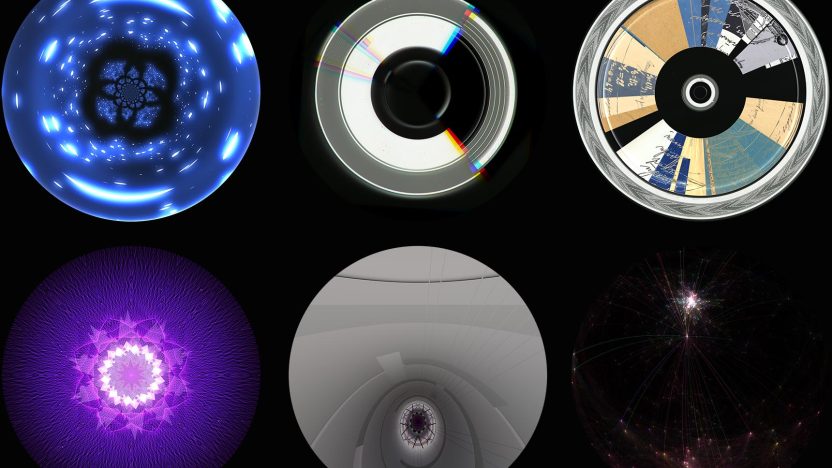
Constant Sky, a fulldome 360 film by Max Hattler, is inspired by the father of Russian cosmonautics Konstantin Tsiolkovsky.
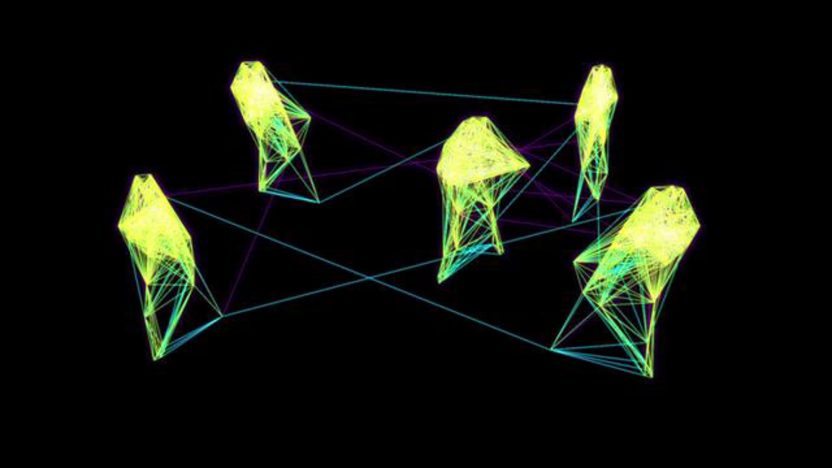
- 2011
Two animation loops investigating the boundaries between human and abstract form.

- 2006
A very short meditation on the street as canvas.